Case Studies
Google ads mock campaigns built to learn performance marketing fundamentals
I created these mock campaigns to gain hands-on experience and build my performance marketing portfolio. They are strictly for educational purposes, and all campaigns have been paused to prevent live spending.
Mock campaign #1- Adamantclix-Google Search
This mock campaign, “Mock Campaign #1-Adamantclix” was built as a Google Search campaign to attract high-intent beginners learning performance marketing. The campaign budget was set to $116 per day with a Maximize Clicks bidding strategy. It is currently paused, as it was created strictly for learning purposes. Search was chosen over Display to focus on intent-driven targeting and keyword strategy.
I chose these keywords to attract the most relevant audience. examples Include “Google Ads explained,” “What is performance marketing,” “how Google Ads work.” and “Marketing step-by-step”. I also used broad match for all of them to maximize exposure while maintaining intent. pairing broad match keywords with Responsive Search Ads allows the system to dynamically test combinations for better performance.
Negative Keywords are crucial to prevent irrelevant clicks and wasted impressions. I added terms like “agency,” “certificate,” “course,” and “career” to avoid reaching users looking for services or content different from what this campaign offered.
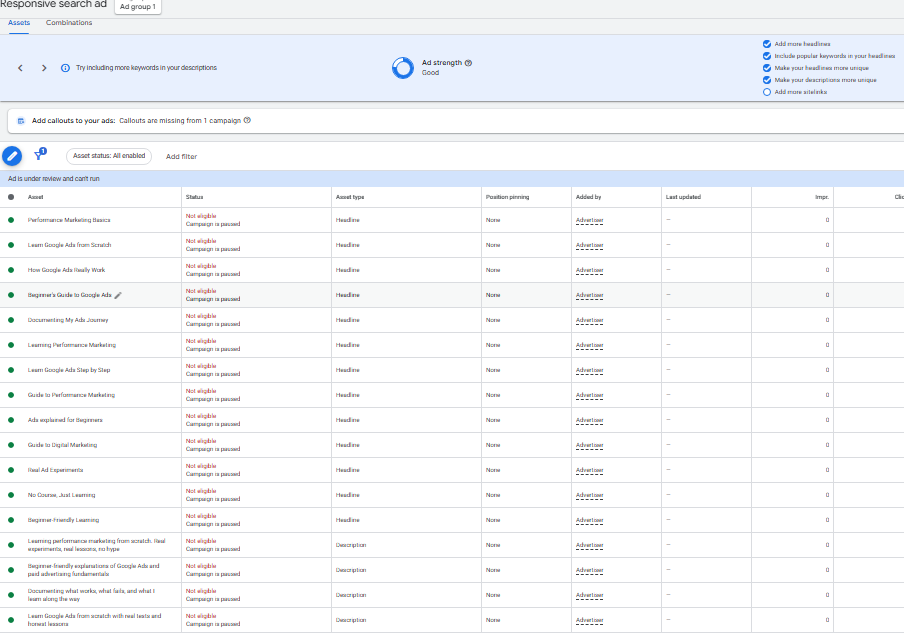
The Ad copy for this mock campaign was written to appeal to beginners interested in learning performance marketing and Google Ads fundamentals. Multiple headlines were created to improve ad strength and give the Responsive Search Ad system more combinations to test. The descriptions focused on highlighting the website as beginner-friendly and easy to understand for users new to digital marketing. Responsive Search Ads were chosen because they automatically test different headline and description combinations to find the best one.
Sitelinks were added to improve ad visibility and make it easier for users to navigate to relevant pages on the website. Each sitelink directs users to specific sections such as the blog and about page, allowing them to choose the content most relevant to their intent. Callouts were also included to reinforce key messaging and better align the ads with what users are searching for. Overall, assets were used to improve clarity, credibility, and user experience while expanding the ad’s presence on the search results page
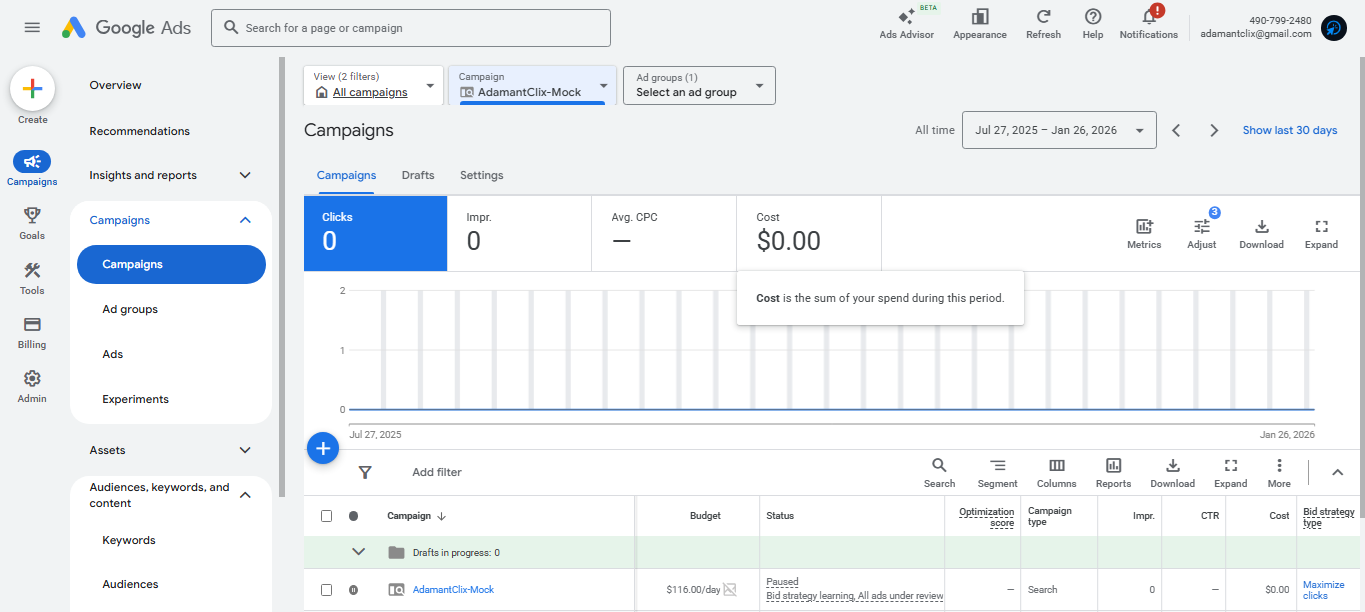
Campaign overview- Paused mock campaign
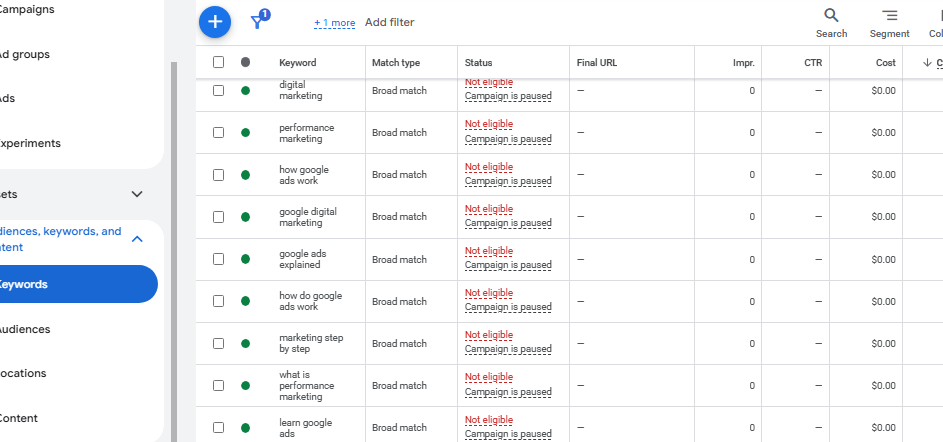
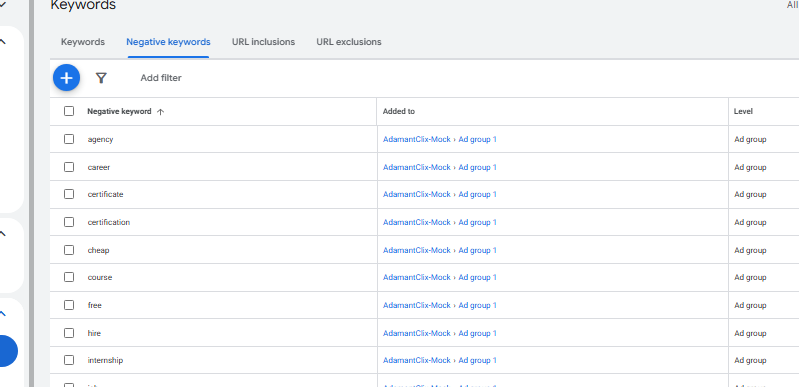
Keywords and Negative Keywords— Intent-focused strategy
Responsive Search Ad— Headlines, Descriptions, and Ad Strength
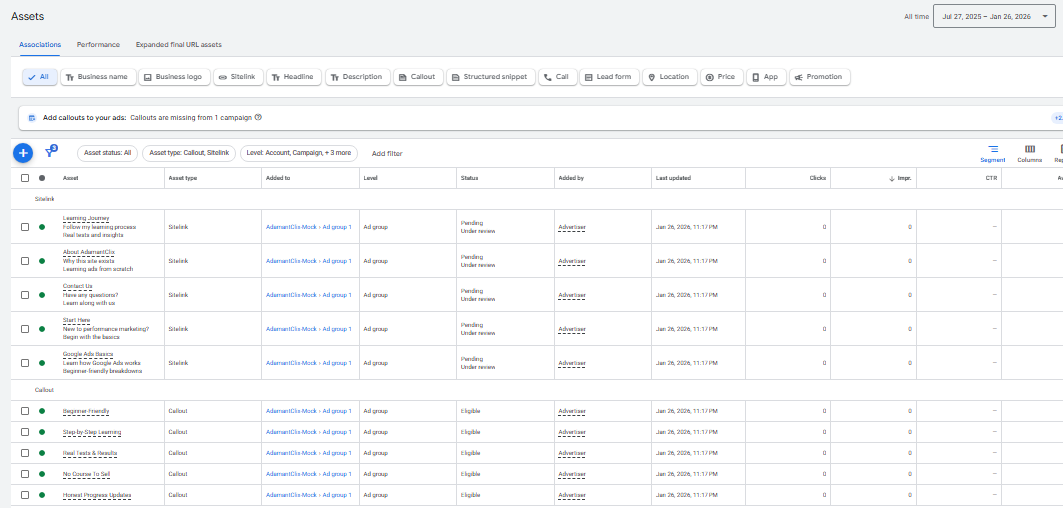
Ad Assets— Improves relevance, navigation, and visibility
What I would Do Next
If this campaign were live, I would first allow enough time for the ads to gather meaningful data before making changes. Once sufficient data was collected, I would analyze keyword performance and refine the keyword list by pausing low-performing terms and expanding on high-performing search queries. I would also regularly review the search terms report to identify and add new negative keywords, ensuring the campaign continues to attract high-intent traffic and avoid unwanted searches.
Additional mock campaigns will be added as I continue developing my performance marketing skills